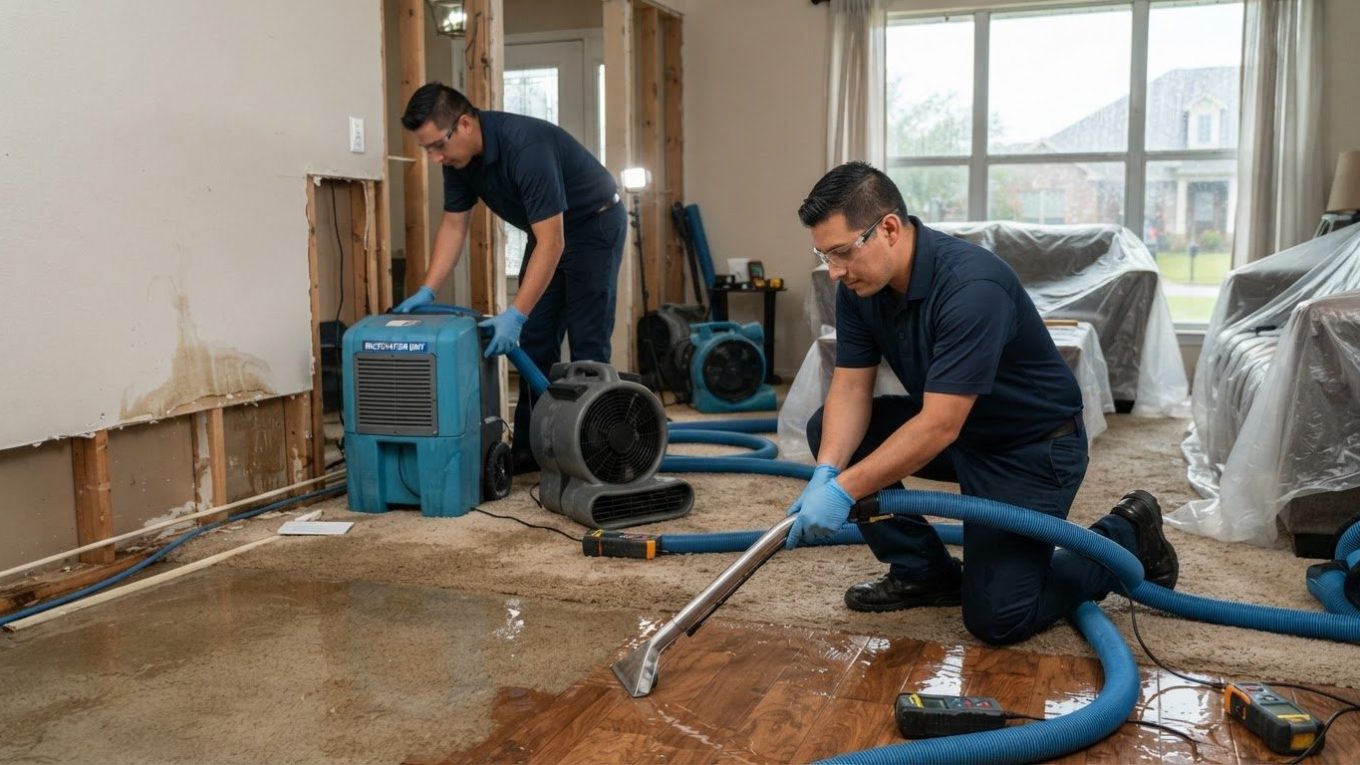
Restore Your Lafayette Property After Water Damage
A burst pipe at midnight, a failed water heater, or a storm-driven roof leak can turn a manageable maintenance issue into a rapidly expanding property loss. In Lafayette, heavy rain, tropical weather, and high humidity can also slow drying and increase the consequences of delayed action.
A professional Water Damage Restoration Service addresses more than visible puddles. It combines water extraction, moisture detection, structural drying, cleaning, and repairs to make a home or business safe and usable again.
The first hours matter. After stopping the source if it is safe, document conditions and contact a qualified restoration provider such as Restoration Logistics Lafayette for an assessment rather than guessing which materials can be saved.
When Water Damage Requires Immediate Attention
Water enters properties through burst supply lines, appliance hoses, overflowing fixtures, storm flooding, sewage backups, and roof or flashing failures. It can migrate through flooring, wall cavities, ceilings, insulation, cabinetry, and electrical pathways.
Standing water is only the obvious portion of a loss. Moisture may remain behind drywall, beneath vinyl or hardwood flooring, inside insulation, or under cabinets. These concealed areas can support odors, material deterioration, and microbial growth even after the surface appears dry.
Take these immediate steps:
- Shut off the water supply if you can do so safely.
- Keep away from outlets, appliances, and electrical panels exposed to water.
- Do not enter sewage or floodwater without appropriate protective equipment.
- Move valuables only if doing so does not create a safety risk.
- Photograph and video affected rooms, contents, and the suspected source.
Emergency service is appropriate when water is spreading, sewage is involved, ceilings or floors appear unstable, essential areas are affected, or the property cannot be safely occupied. If flooding is connected to a storm event, follow local emergency instructions before entering.
Water Damage Mitigation, Remediation, and Restoration Explained
These terms describe different stages of recovery:
- Mitigation stops or controls the source, limits migration, protects contents, and reduces additional loss.
- Remediation includes extraction, drying, cleaning, sanitizing, odor control, and treatment of contamination or microbial risks.
- Restoration repairs or replaces damaged materials and returns the building to a functional condition.
Waiting can increase the scope of all three. Saturated drywall may lose structural integrity, flooring may swell or delaminate, and elevated humidity can spread moisture into previously unaffected areas. Delays also increase odor and may complicate insurance documentation.
How Professional Water Damage Restoration Works
Inspection and Moisture Assessment
A technician begins by identifying the water source, affected rooms, material types, duration of exposure, and contamination category. Clean supply-line water requires a different response from gray water containing contaminants or black water from sewage or flood sources.
Assessment commonly uses:
- Pin and pinless moisture meters for drywall, wood, and flooring.
- Thermal imaging to locate temperature patterns associated with concealed moisture.
- Hygrometers to measure relative humidity and environmental conditions.
- Moisture maps, photographs, room measurements, and equipment logs for documentation.
The objective is not simply to find wet surfaces; it is to define the affected boundary and establish measurable drying targets.
Water Extraction and Controlled Removal
Portable extractors, truck-mounted units, submersible pumps, and specialized vacuums remove standing water and saturated contents. Fast extraction reduces the amount of water absorbed by porous materials.
Selective demolition may be necessary. Technicians might remove a controlled section of drywall, wet insulation, damaged tack strips, or flooring to expose cavities and improve airflow. That does not automatically mean every affected material must be discarded. Nonporous contents, some hardwood components, cabinetry, and structural wood may be recoverable when contamination and swelling are limited.
Structural Drying and Monitoring
Air movers increase evaporation from wet surfaces, while dehumidifiers remove moisture from the air. Depending on conditions, a team may use low-grain refrigerant or desiccant dehumidification, ventilation, and controlled temperature adjustments.
Drying is a managed process, not a matter of leaving fans running. Technicians repeatedly record moisture content, humidity, and temperature, then reposition or remove equipment as readings change. Materials are considered dry when readings approach appropriate unaffected-material targets, not merely when they feel dry to the touch.
Cleaning, Deodorizing, and Repair
Cleaning and disinfection depend on the source and contamination level. Sewage and floodwater generally require containment, personal protective equipment, appropriate disinfectants, and controlled disposal. Improperly treating contaminated materials can expose occupants and workers to health hazards.
Contents may be cleaned on-site or moved through a documented packout. Electronics, documents, textiles, furniture, and personal items each require different handling. Odor control may involve cleaning, source removal, filtration, or specialized deodorization rather than masking fragrances.
The final phase includes drywall and insulation replacement, flooring or trim repairs, painting, cabinetry work, and other reconstruction. Restoration teams may coordinate mitigation records with repair estimates, but emergency stabilization and remodeling are usually separate scopes.
Residential and Commercial Recovery Considerations
For homeowners, priorities include safe living conditions, furnishings, flooring, cabinetry, and personal belongings. A contents inventory can distinguish restorable property from items that should be replaced and can support an insurance claim.
Commercial losses add business-continuity concerns: employee and tenant access, inventory, equipment, records, customer areas, and downtime. A small plumbing failure in a restaurant, clinic, office, or retail space may affect several suites or interrupt operations.
Sewage and floodwater require heightened controls because contaminants can include pathogens, chemicals, and debris. Controlled demolition, containment barriers, negative air, and regulated disposal may be necessary. Do not rely on household fans or attempt cleanup without understanding the exposure risks.
Businesses and property managers benefit from pre-loss planning that records:
- Main water shutoff and sprinkler-control locations.
- Emergency contacts for plumbers, utilities, insurers, and restoration contractors.
- Locations of leases, inventories, backups, and essential records.
- Temporary workspace, tenant-notification, and continuity procedures.
Lafayette’s humid Gulf Coast climate makes rapid moisture removal particularly important. Even when outdoor temperatures are high, indoor humidity can remain elevated after extraction and prolong drying.
Cost, Insurance, and Restoration Decisions
There is no reliable flat price before inspection. National residential mitigation jobs often range from roughly $1,000 to $5,000 for limited losses, while extensive flooding, sewage cleanup, contents handling, or reconstruction can reach $10,000 to $30,000 or more. Commercial losses may be substantially higher. These are broad planning ranges, not quotes.
Cost depends on:
- Water category and contamination.
- Affected square footage and accessibility.
- Volume of water and drying duration.
- Type and condition of flooring, drywall, insulation, and cabinetry.
- Contents cleaning, storage, and packout requirements.
- Selective demolition and reconstruction scope.
Emergency mitigation charges cover labor, extraction, equipment, monitoring, and related services. Repair or remodeling costs—such as replacing cabinets, repainting, or installing new flooring—are generally estimated separately.
Coverage depends on the policy and cause. Sudden accidental plumbing failures may be covered, subject to exclusions and deductibles. Storm-related losses may involve different provisions, while gradual leaks, wear, poor maintenance, seepage, or unresolved defects may be excluded. Flood damage may require specific flood insurance, and endorsements can change available coverage.
Notify the insurer promptly and preserve evidence. Keep photographs, videos, receipts, damaged-item inventories, moisture readings, equipment logs, and written communications. A restoration assessment is necessary before reliable pricing or a defensible repair scope can be provided.
Water Damage Restoration FAQs
How quickly should water damage be addressed?
Immediately, whenever it is safe. Prompt extraction and drying can reduce secondary damage, odor, disruption, and the number of materials requiring removal. Sewage, stormwater, and electrical hazards warrant professional response rather than delay.
What is the difference between water mitigation and restoration?
Mitigation stabilizes the property by stopping spread, extracting water, and drying affected areas. Restoration completes the recovery by repairing or replacing damaged building materials and finishes.
Does homeowners insurance cover water damage restoration?
It depends on the cause, policy language, exclusions, deductible, limits, and endorsements. Sudden accidental losses may qualify, while gradual damage, maintenance issues, or flooding may be treated differently. Ask the insurer what documentation is required.
How long does structural drying take?
Many clean-water losses dry in approximately three to five days, but timelines vary. Material type, water volume, humidity, airflow, temperature, concealed moisture, and the extent of demolition all affect the schedule. Monitoring—not a fixed calendar—is the basis for completion.
Can water-damaged materials be saved?
Often, but not always. Salvageability depends on contamination, saturation duration, porosity, swelling, warping, delamination, and structural condition. Nonporous contents are generally easier to clean, while saturated insulation, contaminated drywall, and severely distorted flooring may require replacement.
