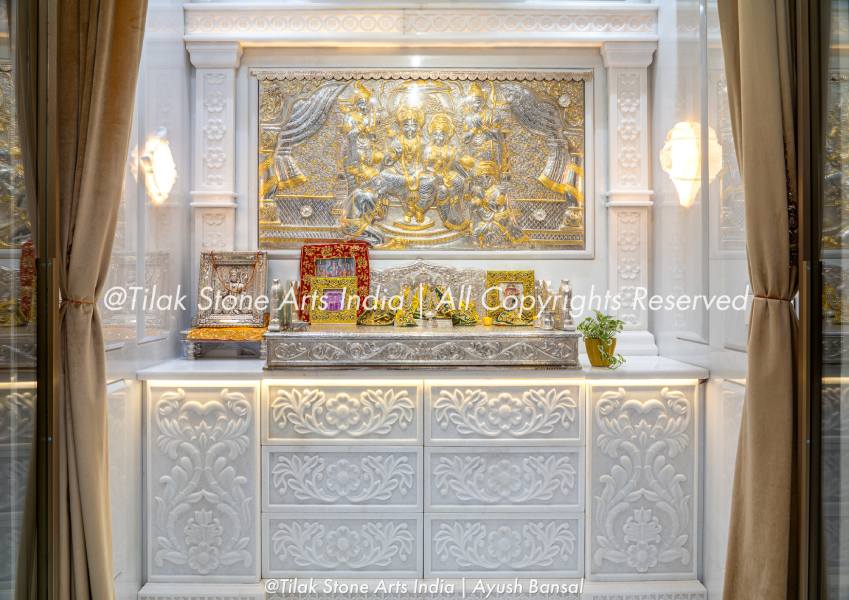
The Real Reason Big Marble Temples Are Becoming the First Choice in Modern Homes
For years, the home shrine sat quietly in a kitchen alcove or on a narrow shelf, treated almost as an afterthought. Yet daily worship asks for more than a borrowed nook. Many families now sense that their devotional space no longer matches the care they bring to it each morning.
The Quiet Rise Of The Dedicated Home Temple
A Space That Earns Its Own Room: A big temple for the home gives daily prayer a setting of real weight and quiet presence. A larger marble structure carries more carved detail and supports a fuller arrangement of idols and lamps, so the household gains a dedicated place that feels settled and genuinely worthy of regular worship at the heart of the home.
Devotion Given A Permanent Address: A Hindu temple for the home brings ritual and tradition into one fixed point that the family gathers around. The form borrows from temple architecture, often with a carved canopy and a raised platform that frame the deity with proper respect, so worship at home carries some of the order felt within a place of pilgrimage.
Marble And The Promise Of Permanence
Formed Under Pressure To Endure: Marble earns its lasting quality from the way it forms deep within the earth. As a metamorphic stone, white Vietnam marble begins as limestone and slowly recrystallises under heat and pressure, and the finished slab gains a dense, even body. That density is part of why fine temple carving stays crisp and holds its definition across decades of use.
Placed In Tune With The Home: The position of a home temple matters as much as its making. Traditional guidance from Vastu Shastra places the shrine in the north-east of the home, with the worshipper facing east or north during prayer. A dedicated marble temple makes this easier to honour, since its weight and footprint let it sit permanently in the correct orientation without being shifted.
When The Pooja Unit Becomes The Centrepiece
Built Into The Home From The Start: Premium homes now plan the temple into the layout rather than adding it later. Designers set a full marble pooja unit within a dedicated niche, add its lighting and match it to the surrounding flooring so it belongs to the architecture. A freestanding design often suits larger rooms, while a slimmer wall-set temple serves homes where space stays limited.
- A dedicated niche sized to hold the temple and its daily essentials.
- Concealed lighting that lifts the white marble and softens its carved detail.
- A raised plinth that sets the shrine apart from the rest of the room.
- Discreet storage below for lamps and ritual items kept out of sight.
- Stone finishes chosen to suit the wider material palette of the home.
The Cost Of Settling Too Soon: A marble temple is chosen once and lived with for decades, so a rushed decision surfaces later. People who work closely with these projects often see families who settled for a cheap, lower-grade piece return within a few years to replace it. Weaker stone can dull or yellow, and the room gets finished before the temple is planned.
A Sacred Space Worth Passing On
A dedicated marble temple gives daily worship the permanence and dignity it has long deserved in the home. Every year spent making do with a borrowed shelf is a year that sacred space waits to be honoured in full. Speak with a specialist mandir designer today to begin shaping a temple your family will keep for generations.
