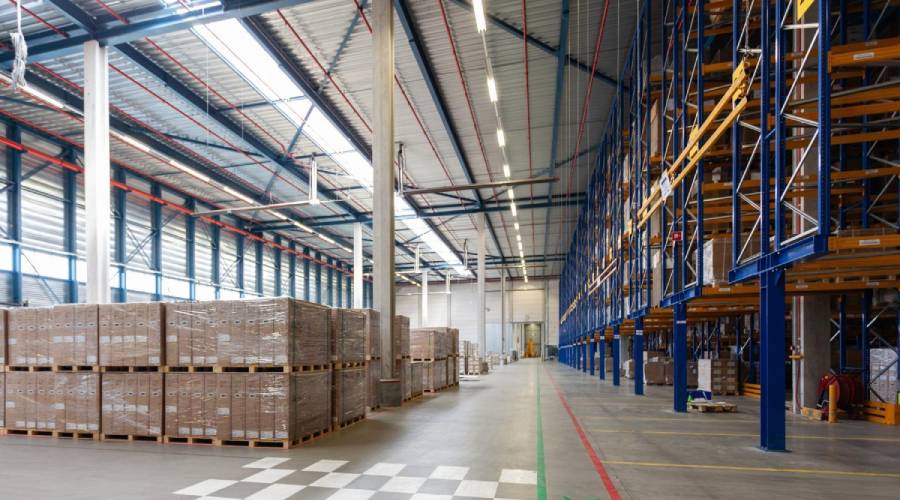
Warehouse Plan ROI: How Well-Designed Layouts Reduce Costs
In the world of logistics and supply chains, speed is a key factor. Among the most underestimated-yet massively impactful aspects of operational efficiency is the way in which a warehouse is designed and laid out.
An inefficiently designed facility can cause traffic bottlenecks and misplacement of products and increase handling time, which in turn increases operating cost. On the other hand, an efficiently designed warehouse layout can provide excellent return on investment (ROI) through simplifying operations, improving safety, and maximizing the use of available cubic feet.
The most important aspect of a profitable warehouse is a warehouse plan that matches business objectives and operational flow. This plan is by no means a simple blueprint since it serves as the basis for inventory management, labor deployment, and material handling systems. A well-optimized layout reduces unnecessary travel and errors and provides quicker order fulfillment, which directly means lower costs and higher profitability.
Space Optimization Lowers Real Estate Costs
An efficient warehouse layout is one which utilizes each square foot. Rather than moving into a bigger facility, in many cases, businesses can accommodate increased demand just by improving their existing space.
Intelligent storage solutions like vertical storage, modular racking, and well-marked areas help to better organize inventory. This not only reduces the need for expansion but also saves time and effort spent searching for items.
Streamlined Workflow Reduces Labor Costs
One of the greatest recurring costs in the operation of the warehouse is labor. Inefficient layout may magnify walking distance, handling time, and the staff required to get the work done.
Innovative warehouse design strategies consider the sequence of operations—from receiving to storing, picking, packing, and shipping. With the shortest possible travel distance and the ability to establish logical workflow, businesses can cut down labor needs and enhance productivity that further increases ROI.
Improved Accuracy Minimizes Costly Errors
Errors during order picking or placement of inventory can prove to be quite expensive, in returns as well as customer satisfaction. A warehouse with an intelligent design will help increase the precision of operations.
As an illustration, items that move fast may be brought closer to shipping zones, which lowers the probability of selecting the incorrect item or postponing the process. Clear labels, clearly marked aisles, and integration of technology further eliminate human error.
Integration with Automation and Technology
Automation tools such as conveyor systems, robotic pickers and warehouse management systems (WMS) are becoming common features in modern warehouses.
A good layout is scalable and flexible and meant to support such technologies with ease. This not only enhances real time tracking and data accuracy but also increases the speed of operations, which are essential elements of reducing costs and increasing returns.
Quicker Turnaround Enhances Customer Satisfaction
In the era of Amazon Prime and next-day delivery demands, customer satisfaction is directly linked to speed of fulfillment. An efficient warehouse allows you to process orders faster, which will not only create satisfied customers but will also lead to repeat business and positive reviews. In the long run, this helps in retaining customers—an important factor in ROI.
Conclusion
ROI in warehouse management is not solely about increasing revenue—it’s just as much about reducing unnecessary costs. A well-executed warehouse plan can help businesses achieve both by optimizing space, reducing labor, enhancing safety, and improving customer service. As companies continue to scale and face evolving market demands, investing time and resources into strategic warehouse layout design is a prudent step toward long-term financial health and operational excellence.
