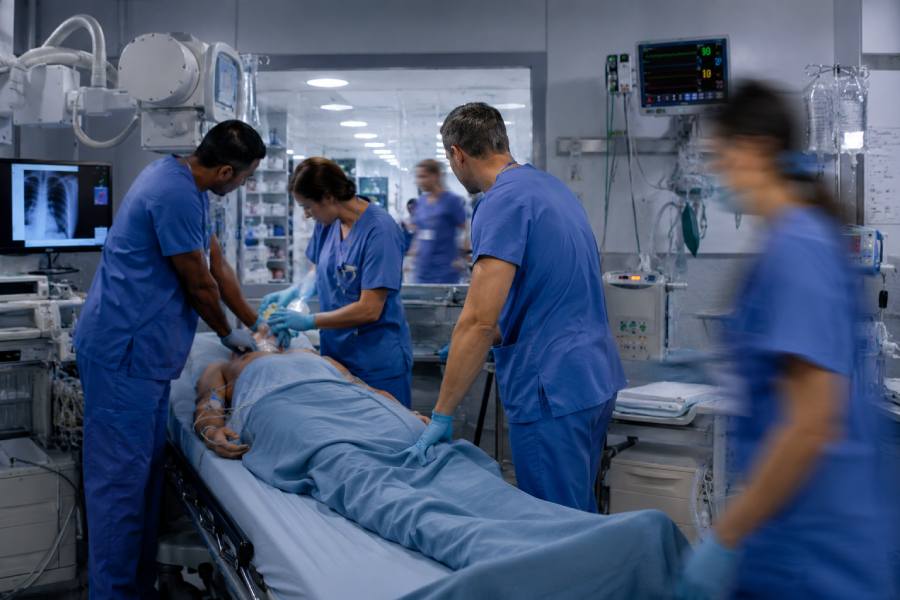
How Technology Has Improved the given Care at Every Modern Trauma Centre
Emergency healthcare has greatly been enhanced by medical technology. Advanced diagnostic equipment provides a faster and more precise patient evaluation.
Quick medical decision making is supported by real-time monitoring and communication systems. These innovations will ensure optimal treatment efficacy, better patient outcomes, and emergency response.
Modern emergency departments are using advanced technology to improve patient care. Every trauma centre is reliant on advanced imaging and rapid diagnosing devices to take more accurate injury measurements.
Vital signs can be continuously observed with the help of digital patient monitoring. Electronic health records enable medical staff to access information about patients within a short duration of time, facilitating quick treatment decisions.
Coordination between medical experts is enhanced by integrated communication systems. The innovations help in making faster treatment decisions and improving patient outcomes.
The majority of medical facilities like a hospital in Ranchi Jharkhand have adopted contemporary medical technologies for emergency care. Using high-speed imaging and AI-assisted diagnostics helps to diagnose an injury promptly.
Following are the innovations that have changed emergency care, diagnosis, treatment and patient outcomes:
- Advanced Diagnostic Imaging
Advanced diagnostic imaging enables doctors to assess traumatic injuries faster and more accurately. Detailed internal images are evaluated by the use of high-resolution CT scans, MRI systems and digital X-rays.
Mobile ultrasound systems help to achieve rapid bedside assessment during an emergency. Timely treatment decision making can be carried out by earlier and accurate diagnosis. This technology enhances patient outcomes, and minimizes the chance of complications.
- Real-Time Patient Monitoring
Real time patient monitoring can be used by healthcare teams to continuously monitor the patient’s condition during an emergency. High accuracy heart rate, blood pressure, oxygen saturation and respiratory rate are observed by advanced monitoring devices.
Sudden changes in vital signs are instantly alerted to medical personnel. Real-time data access leads to rapid clinical decision making and timely healthcare practices. Constant monitoring improves patient safety and helps to achieve better treatment results.
- Artificial Intelligence in Emergency Care
AI is changing the field of emergency care by providing prompt and more precise clinical assistance. The systems that use AI can scan medical images to detect severe conditions timely.
High-risk patients can be identified with the help of predictive algorithms and given priority treatment. Such technologies decrease the time of diagnosis and enhance decision making. Consequently, healthcare teams are able to have quicker, more specific, and efficient emergency care.
- Digital Communication and Coordination
Healthcare teams can be assisted in sharing patient information by using digital communication systems in an efficient and safe way. Imaging reports, test results and medical records are readily available to doctors, resulting in improved clinical decisions.
The use of real-time communication between emergency specialists, surgeons, and doctors cuts down treatment delay. Synchronized workflow increases the effectiveness of response during critical situations. This technology enables faster interventions and overall patient care outcomes.
- Robotic and Minimally Invasive Procedures
Robot assisted surgery has helped in improving complex emergency surgeries in terms of accuracy. Minimally invasive surgery uses fewer incisions and consequently, tissue destruction is minimized.
Hospitalization and recovery period is often minimized by such advanced techniques. Increased accuracy of surgery further decreases complications entailed in critical operations. Therefore, it results in less risky procedures and improved patient treatment outcomes.
Conclusion
Technology is still redefining emergency healthcare by faster diagnosing and providing more accurate treatment. Innovative health care systems enhance communication and assist faster clinical decision making. With ongoing innovation, healthcare professionals will be able to offer more effective care.
